.png)
Create Your First Project
Start adding your projects to your portfolio. Click on "Manage Projects" to get started


Detecting Differences in Brain-Wiring: Diagnosing Color Blindness with EEG
Project type
Neuroscience
Date
April 2024
Location
UvA & PsyPhy
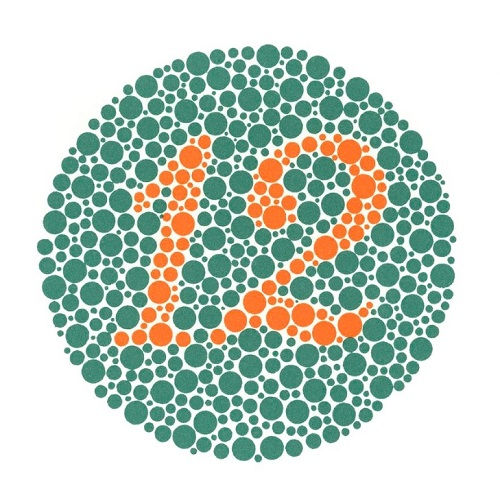
In this thesis, Dr. H.S. Steven Scholte and I tried to determine if measuring a difference in neural circuitry within the visual system is possible. The measurement was a difference between subjects with specific types of color blindness and normal vision, using an explicit mechanistic computational model in combination with specific color stimuli and electroencephalogram (EEG) measurements. Using predicted responses from a computational model developed by Scholte et al., 2009 and Groen et al., 2013, we hypothesized that we would be able to explain event-related potential (ERP) responses to color information for subjects with, but not without, color blindness.
The hypothesis used a visual processing model to determine gap statistics, expecting little to no explained variance in ERP from every participant in the colorblind (CB) group when presented with the stimuli. The results of the visual processing model indicated that colorblind participants had a higher explained variance in RG & BY color information than the control group, contradicting the original hypothesis. CB participants' responses have a higher explained variance at T5/T6 160 ms than NV participants; Gamma RG (CB: r = 0.17 & CN: r = 0.07) & Gamma BY (CB: r = 0.12 & CN: r = 0.07). The several color parameters in the stimuli used were found to correlate with the luminance parameter, thus making them unusable in analysis. Future researchers can further adapt the stimuli with better control and pre-test the correlation between color parameters during stimulus creation. An updated hypothesis testing for higher explained variance in the CB group may also be valid.